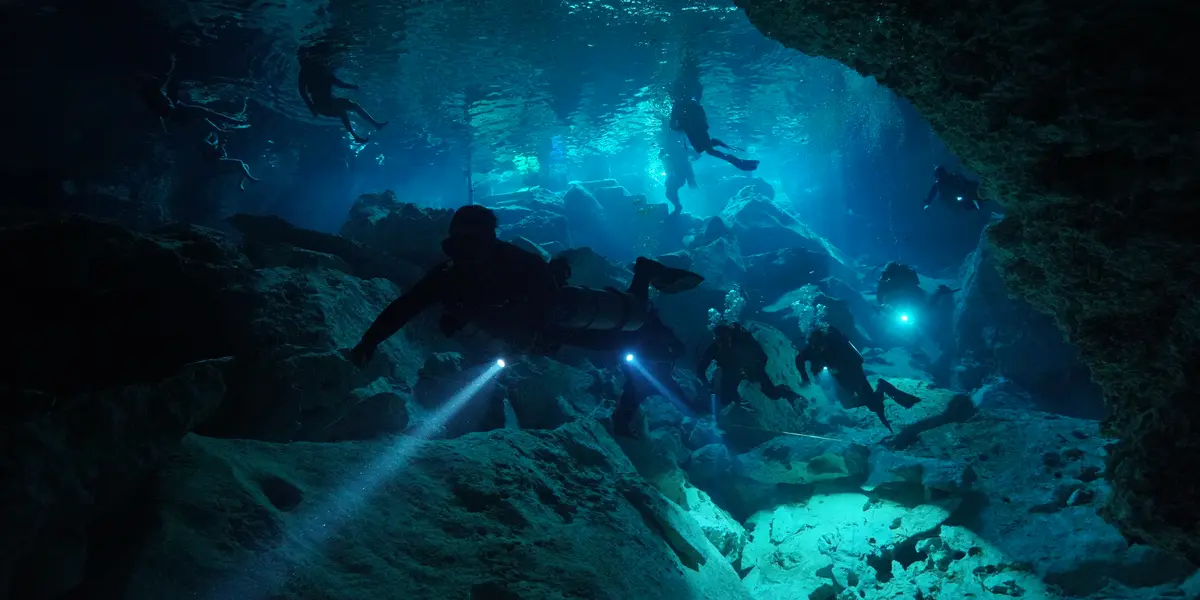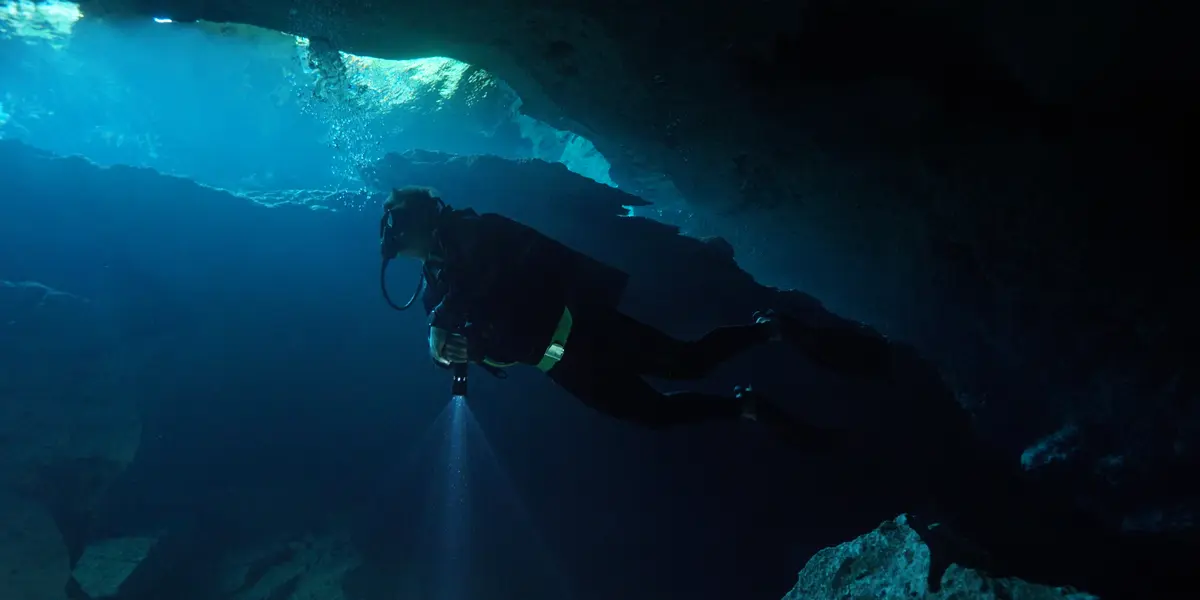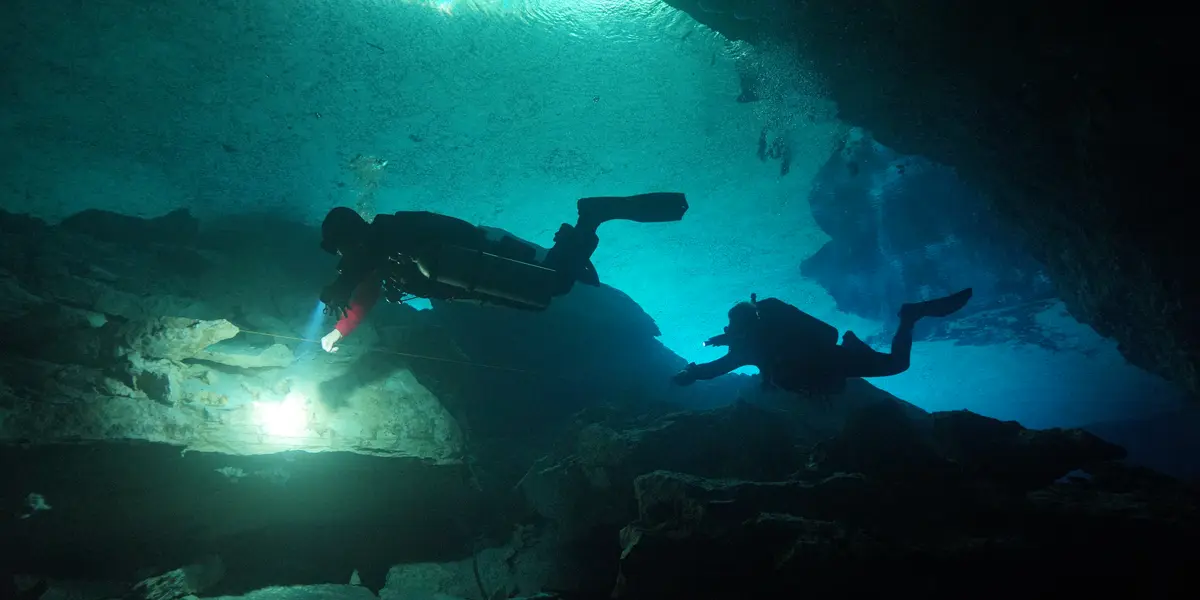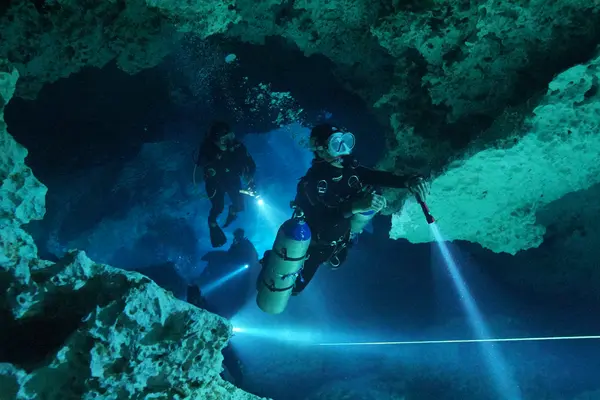
When a certified diver asks me for a cenote “different from Dos Ojos” — something just as easy to access, but that doesn't feel like the route half of Instagram has already done — I think immediately of Chikin Ha cenote diving. For the Maya, this type of cenote was considered a gateway to the underworld; for a certified diver today, it's one of the few sites where you can get a spectacular halocline, stalactite formations, and even a cave route for advanced-certified divers, all in the same outing.
I've been guiding cenotes in the Riviera Maya for more than 30 years, and Chikin Ha is one of those sites people underestimate until they dive it. It's not the most photographed, but for a diver who already knows what they're looking for, it's one of the most complete. Here's exactly what you'll find, and who it's ideal for.
What Is Cenote Chikin Ha and Why Is It Different?
Chikin Ha is a cavern cenote with a maximum depth of approximately 14 meters, which makes it accessible without sacrificing anything that makes a cenote special: rock formations, natural light filtering down from the surface, and a pronounced halocline that's worth the dive on its own.
Unlike some busier sites, Chikin Ha offers two experiences in the same place: a cavern route with medium-easy difficulty, accessible to any Open Water certified diver, and a more technical cave route for those who already hold a cave diving certification and want to go further.
The Chikin Ha Halocline: The Main Differentiator
If you ask me the number one reason to dive Chikin Ha, it's the halocline. At depths between 10 and 14 meters, where fresh water meets the salt water seeping in from the sea, that visible, rippling line forms that genuinely distorts everything you look at through it — the same phenomenon that makes cenotes like Angelita famous, but here at a much more accessible depth.
I've taken groups through this halocline hundreds of times, and I still see divers with years of experience stop halfway just to look up and watch the distortion effect. It never gets old.
Ready to see the Chikin Ha halocline for yourself?
Book your Chikin Ha cenote dive with Deep México and experience firsthand why this cenote stays in the memory of our certified divers.
Cavern Route vs. Cave Route: Which Should You Choose at Chikin Ha?
This is the question I get most from divers who arrive cave-certified and aren't sure whether it's worth using that certification here. The short answer: it depends on how technical you want your dive to be.
| Cavern Route | Cave Route | |
| Certification required | Open Water | Cave diving certification |
| Difficulty | Medium-easy | Technical — advanced-certified divers only |
| Maximum depth | ~14 meters | ~14 meters |
| What you'll see | Halocline, natural light, main formations | Narrower, more technical passages within the same system |
| Best for | Most certified divers | Divers already seeking cave challenges |
Formations and Light: Stalactites and Light Beams in the Cavern
Beyond the halocline, Chikin Ha has stalactite formations that have taken thousands of years to grow drop by drop — which is exactly why we ask every diver to dive carefully around them without touching, no matter how many dives they've logged. In the morning hours, when the sun hits directly, light filters through in beams that cut across the cavern and give the formations a glow that shifts depending on where you're swimming.
If you've already dived Chac Mool or Dos Ojos, you'll recognize that same feeling of being inside a natural cathedral — but the specific combination of halocline plus stalactites is what makes Chikin Ha feel different.
Who Is Chikin Ha Cenote Diving Right For?
The main cavern route is built for any Open Water certified diver and up, with a medium-easy difficulty that makes it accessible even if it's your first cenote. As with all our outings, the minimum participation age is 15.
If you also already hold a cave diving certification — or you're interested in getting one, which you can do with us through our PADI courses — the Chikin Ha cave route is a real opportunity to put it to use in a system with formations and a halocline, not just empty passages.
Frequently Asked Questions About Chikin Ha Cenote Diving
What certification do I need to dive Chikin Ha?
The main cavern route only requires an Open Water certification. The cave route requires a specific cave diving certification.
How deep is Cenote Chikin Ha?
It reaches a maximum depth of approximately 14 meters on both the cavern and cave routes.
Does Chikin Ha have a halocline?
Yes, it's its main differentiator. Between 10 and 14 meters deep, a pronounced halocline forms where fresh water meets salt water.
What's the minimum age to dive Chikin Ha?
The minimum participation age on our outings, including Chikin Ha, is 15.
Can I take photos or video inside Chikin Ha?
Yes, always following your guide's instructions on lights or flash. Camera use may carry an extra cost depending on the cenote, since it isn't included in the base tour price — ask about the details when you book.
Dive Cenote Chikin Ha with Deep México
Chikin Ha doesn't need to compete with Dos Ojos or Chac Mool for fame — it has its own case to make: an accessible halocline, stalactite formations, and the flexibility to choose between a medium-easy route or a technical cave route, all within the same system. With more than 30 years guiding cenotes in the Riviera Maya, at Deep México we take you along the route that matches exactly your certification level.
If you've already dived other cenotes in the area and you're looking for something with a real differentiator, this is a solid next step.
Book your Chikin Ha cenote dive with Deep México today.
Tell us your certification level and travel dates — we'll take care of the rest.
Phone: +52 984 157 5464
Email: booking@deepmexico.com
Deep México · Playa del Carmen, Riviera Maya · PADI Store PIN: 5982 · +30 years of experience · Guides in English, Spanish, German, Italian and French